writer, novelist
TedX Video
Steven
Favreau
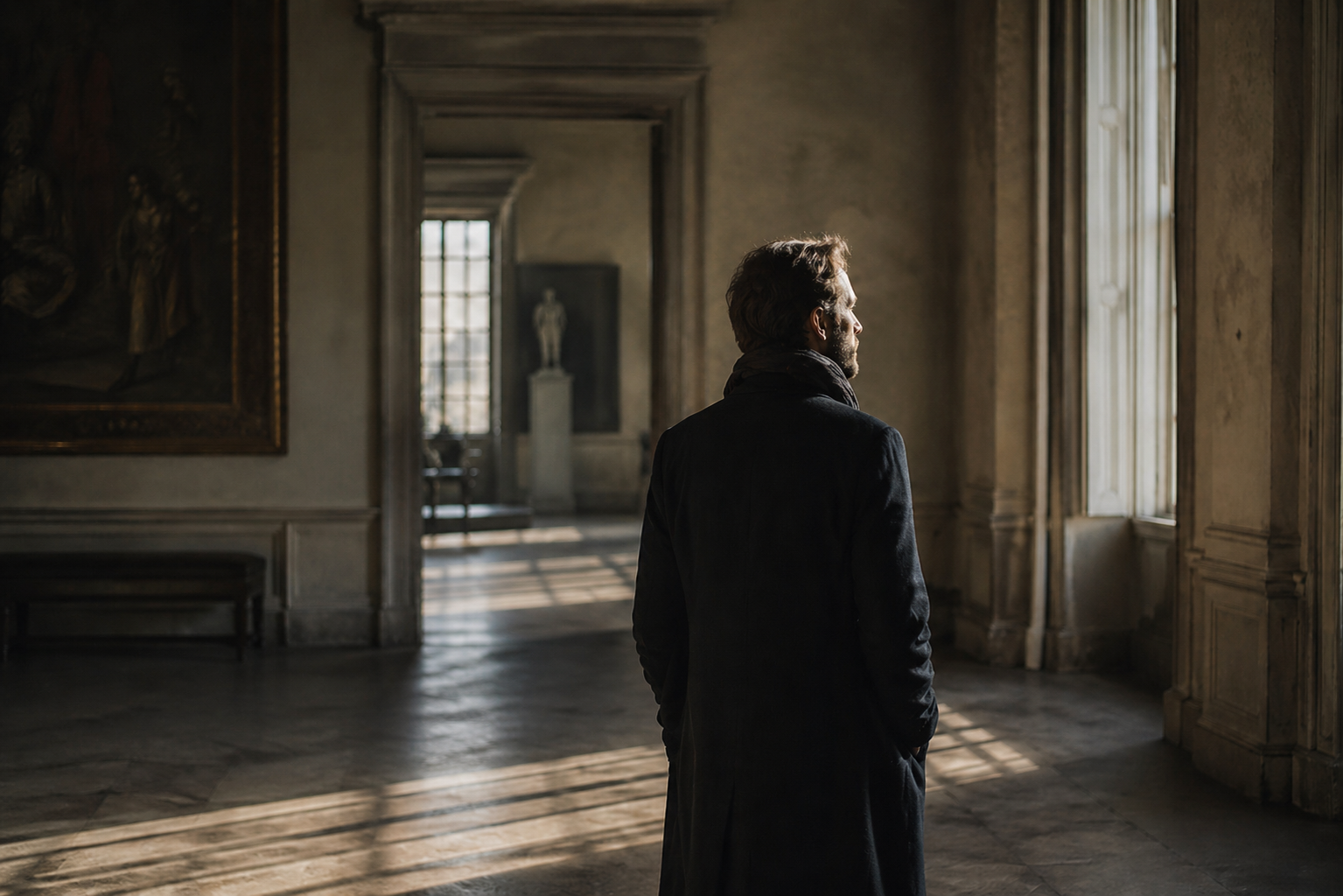
Steven Favreau is a writer and independent historian whose fiction considers how the past survives in houses, landscapes, family memory, and the accounts a culture decides to keep. He studied Shakespearean dramaturgy and playwriting at the Boston Conservatory, followed by creative writing and screenwriting at Hawai‘i Pacific University. That training continues to shape his attention to character, dramatic pressure, and the architecture of long-form narrative.
His historical research centers on American life in the eighteenth and nineteenth centuries, particularly the Hudson River Valley, where he lives. Its river towns, industries, houses, and local histories provide much of the ground from which his fiction grows. Objects retain the marks of their makers and owners; inherited stories change in the telling; lives absent from official records leave traces elsewhere.
Favreau writes literary and historical fiction, often allowing the supernatural to enter through the physical world. His work moves across generations and gives sustained attention to the consequences of private decisions as they pass through families and communities. Place is central to that work, shaping the lives of his characters as powerfully as inheritance or circumstance.
His perspective is also informed by his experience as a gay man and by many years spent observing the customs, negotiations, and contradictions of LGBTQ+ life. He is interested in the selves people present for safety or acceptance, the desires they conceal, and the lives they attempt to make within expectations established by others. These concerns run through his historical and contemporary fiction alike.
His writing has appeared in The Harvard Gay & Lesbian Review and Fieldfare. He is also a staff writer for BroadwayWorld.

NOVELS
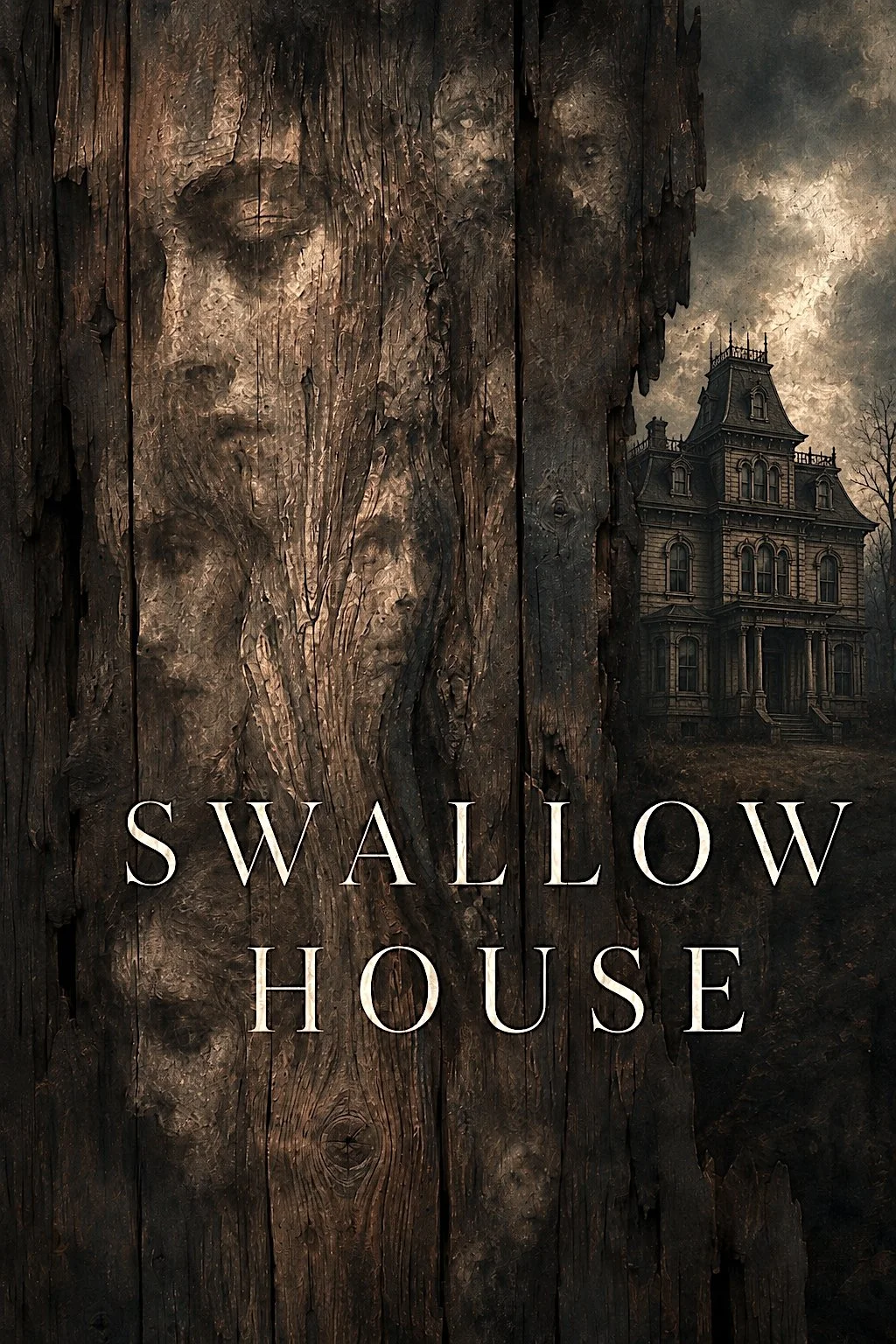
On April 7, 1845, the steamboat Swallow struck a rock off Athens, New York, during a spring snowstorm on the Hudson River. The vessel broke apart and sank, killing thirty-nine passengers. Because no complete passenger roll had been kept, fourteen of the dead were never identified or even conclusively counted. The captain later purchased the wreckage and carried its charred timbers inland to Kinderhook, where he used them to build a house. The wreck, the salvage, and the house belong to history. Swallow House begins with what history failed to record.
Fifteen spirits travel inland inside the wood: the fourteen lost to the official tally and Caleb Thorne, whose death was known from the beginning. They call the living grain that holds them the Quick. Once the timber is raised into walls, floors, and rafters, they remain within the house for nearly two centuries, unable to leave until each of their names is spoken aloud.
The captain arrives in Kinderhook with a young bride who has been pressed into a marriage she never wanted. She alone can hear the voices in the timber. In secret, she begins recording the lives of the dead, filling a series of journals that disappear into the house and remain hidden for more than a century.
As ownership passes from one generation to the next, the house becomes a stage for ambition, scandal, invention, and reinvention. A female impersonator arrives after fleeing disgrace in New York. An elocutionist works the parlor circuit while concealing the damage he leaves behind. Theodore Roosevelt, Edith Wharton, John Burroughs, and Elsie de Wolfe cross its rooms, and Harry Houdini investigates a séance held in its dining room. In 1962, a Black novelist begins her most dangerous book at a desk built into the house while one of the spirits, a slave catcher in life, listens from the wood.
The story moves between 1845 and 2025 through the voices of the dead, the bride’s journals, a once-famous nineteenth-century novel, and the private records of those who later inhabit the house. Each generation alters the building and the stories told about it, while beneath plaster, paint, and new construction, the original timber remains.
By the time the house falls into ruin, nearly everything that once gave it consequence has been forgotten. Its restoration brings the buried journals back into the light, along with the lives of those whom the official record left unnamed. Saving the house, however, will require more than repairing its walls. The dead have waited one hundred and eighty years to be recognized, and the living must decide what is owed to those history allowed to disappear.
IN DEVELOPMENT
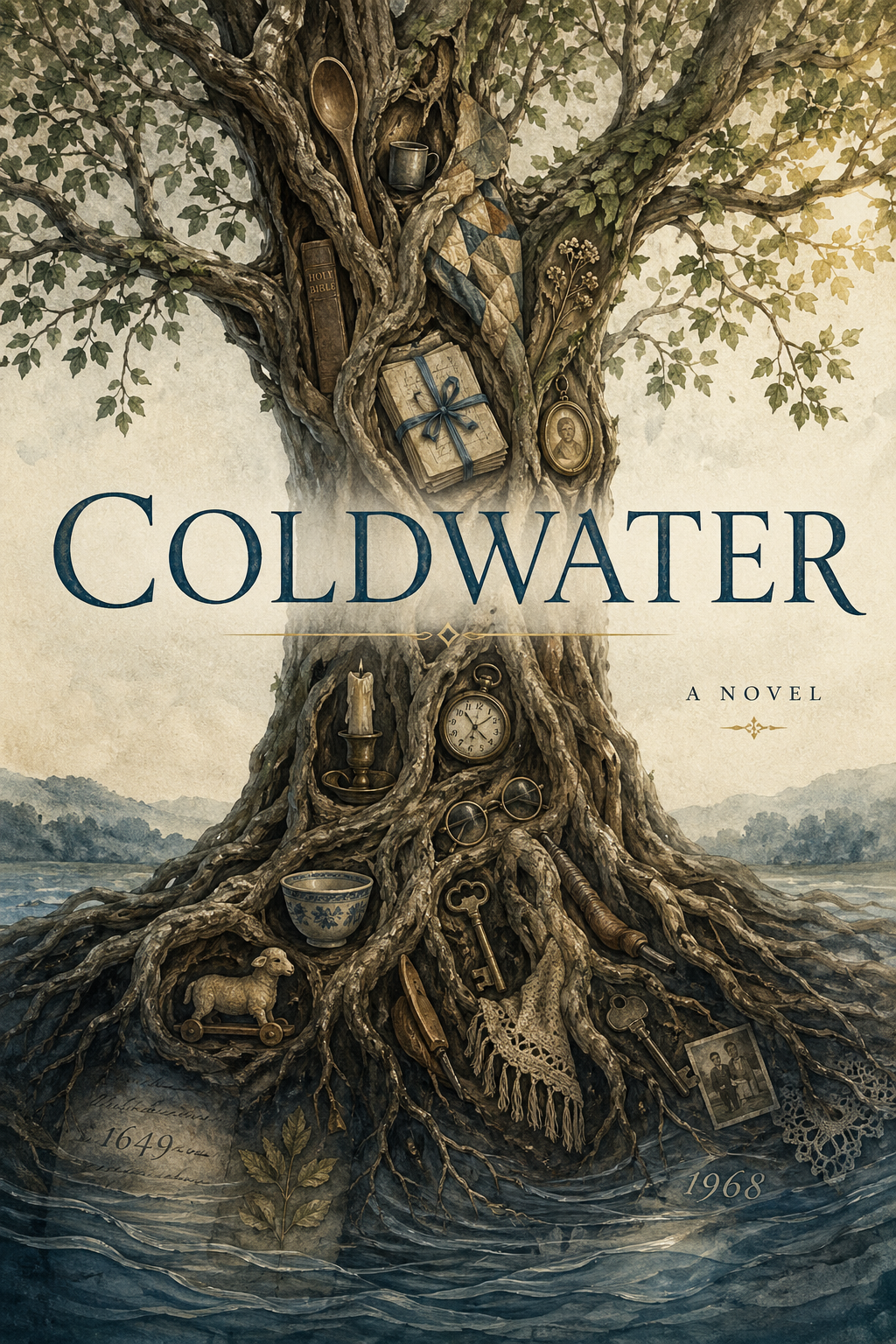
Coldwater is a sweeping literary epic that charts fourteen generations of one family bound to a single, mysterious object: a black-alder box carved in seventeenth-century Holland from a forest older than the prayers spoken beneath it. From the marshlands of Volendam to the early Hudson river valley of a burgeoning America, the box becomes a vessel for what cannot be buried. Grief. Mercy. Memory. Desire. Each hand that holds it alters its meaning. Each life it touches leaves a mark that time refuses to erase.
In 1995, Claire Whitman, a graduate student from Columbia University, arrives at Saint Lucia’s of the Hidden Light, a convent on the shores of the Hudson River, to research her thesis on how the religious patriarchy has sought to silence women’s voices. What begins as scholarship soon becomes deeply personal when she uncovers a trail left by her late mentor and lover, Maria Desrosiers—a brilliant, guarded scholar whose life was marked by secrecy, betrayal, and desire. As Claire follows Maria’s traces, she discovers that Maria once shared an intimacy with Anna Lazare, the convent’s elusive archivist.
ESSAYS and ARTICLES
BECOMING DADDY
It was during a brief liminal period that I became a Daddy. I was moving back to Boston after several years in San Francisco, a city that had become filtered light and startup ambition and no longer felt like mine. Boston had a gravity I needed: its stubborn seasons, its stone-faced honesty. My business was bi-coastal, which meant that for two months I lived out of a suitcase and a duffel bag, shuttling between a futon in Telegraph Hill and a mattress on the floor of my South End loft. Read More
THE CARTOGRAPHY OF VANISHING MOTHERS
The first map came four days after the funeral, into a house that had turned everything else away: the casseroles left on the step until the butter soured, the cards she pushed unopened to the back of a drawer, the neighbor who knocked and waited and finally went home. She found it on the kitchen table when she came in from the yard, squared to the table's edge as though someone had just set down the pencil and walked into the next room. It was the heavy paper her mother had always bought, cream, faintly ribbed, clean on three sides and torn along the fourth. Read More
THE DEEPFAKE MARRIAGE
Elena only needed the laptop to pay the water bill. Paul was already in bed, phone facedown on the nightstand, the blue glow on his jaw fading toward sleep. She took his because it was closest, because her own was in her work bag out in the car, because there was nothing dramatic about keeping the tap from being shut off. She set it on the kitchen table and wiped a circle on the wood with the heel of her hand, a habit from years when small messes still felt fixable. Read More
THEATRE REVIEWS
LETTERS FROM MAX
There is a particular pleasure to theater in our part of the world at this time of year, when the city empties out and the real discoveries are happening in barns, grange halls and converted mills up and down the region. Summer stock and regional theater are where the form keeps its nerve, and the finest of these companies are jewels tucked away down back roads. Ancram Center for the Arts is one of the best we have anywhere near here, and its production of Sarah Ruhl's Letters from Max, running only through this Sunday, is the sort of thing you spend the next year regretting if you let it pass. Read More
CURTAIN CALL FOR CRITICS
On a Tuesday evening last fall, I sat in the mezzanine of a midtown Broadway house, notepad open, watching a new musical that had arrived with significant advance buzz and a capitalization north of $15 million. The house was nearly full. To my left, a couple in their sixties studied the Playbill with the quiet seriousness of people who had been doing this for decades. To my right, a young woman, early twenties, maybe, held her phone below sight line, thumbing through what I could see was TikTok. She was watching a fifteen-second reaction video of someone who had seen the same show the night before. Read More
IF THE STARS WERE MINE
Claybourne Elder lived in my imagination long before he stepped onstage at 54 Below. Years of seeing him in Company, Bonnie and Clyde, Passion, and Sunday in the Park with George had fixed him there as a particular kind of Broadway specimen: brooding, handsome, carved almost to the point of myth, all masculine voltage and clean theatrical authority. With those chiseled features, that brooding brow, that formidable physical presence, who could blame casting directors for repeatedly reaching for the same pencil. Yet star quality, for all the abuse that phrase has suffered, becomes unmistakable when it is real, and Claybourne seems to possess it in abundance. Read More